Storytelling in Junk Journals (How Pages Hold Meaning Without Words)
Table of Contents
You open the cover and the whole thing feels alive in your hands.
You turn the page and the mood shifts. The colors cool down. The paper gets rougher. A small tag peeks out from a pocket like it’s waiting for you. Without a single sentence, you can tell something happened between then and now.
That’s the pull of storytelling in junk journals. You’ll build meaning with simple choices, color, sequence, texture, small symbols, and hidden parts.
Why junk journals tell stories so well (even when you don’t write)
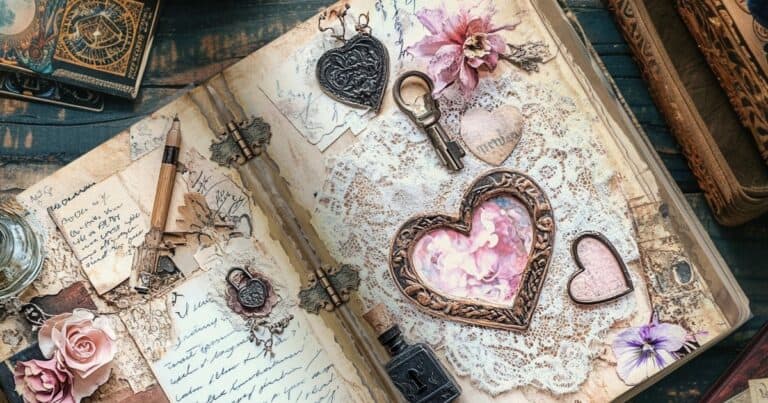
Junk journals work so well for storytelling because they let you build a narrative visually. Instead of relying on paragraphs and sentences, you use pages, layers, and elements to guide the viewer.
You’re not limited to one way of telling a story. You can keep everything visible on the page, or you can tuck parts of the story into pockets and tag spots. That flexibility is what makes junk journals such a natural storytelling format.
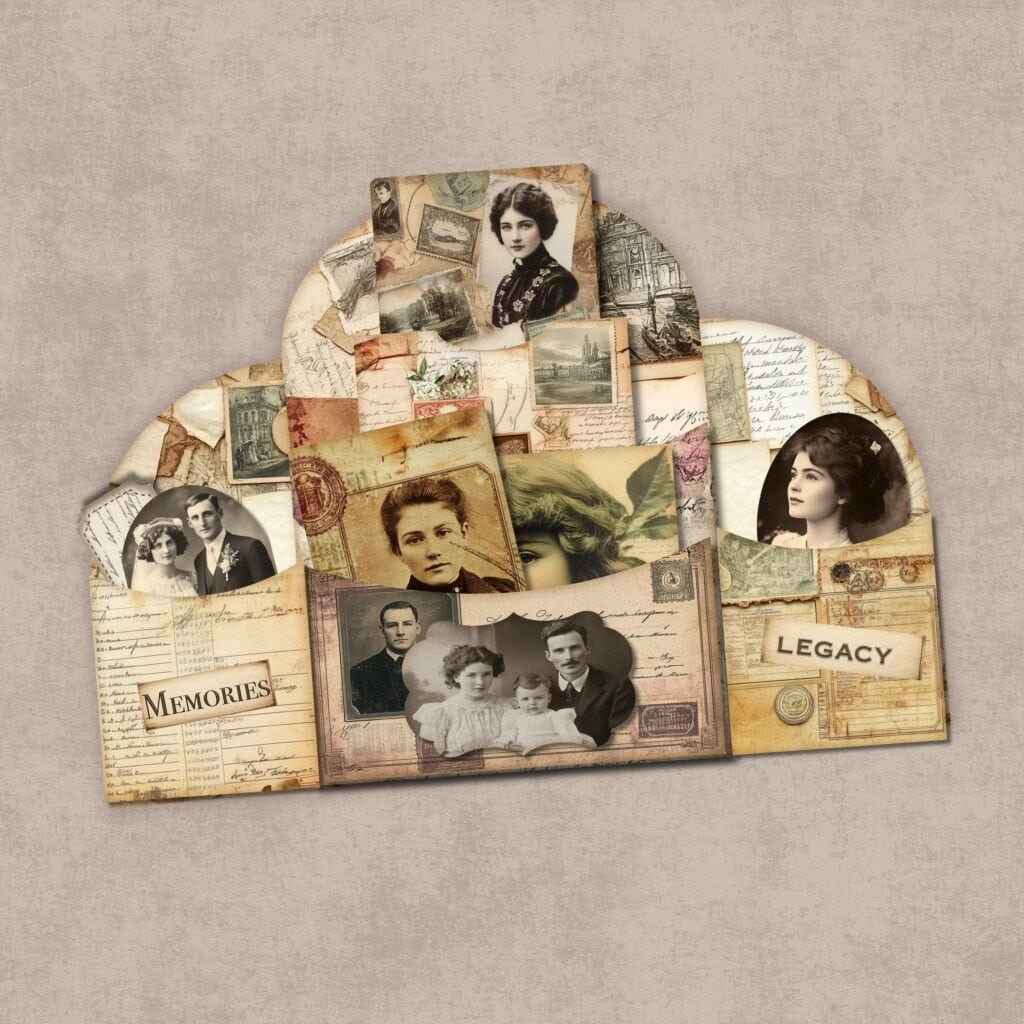
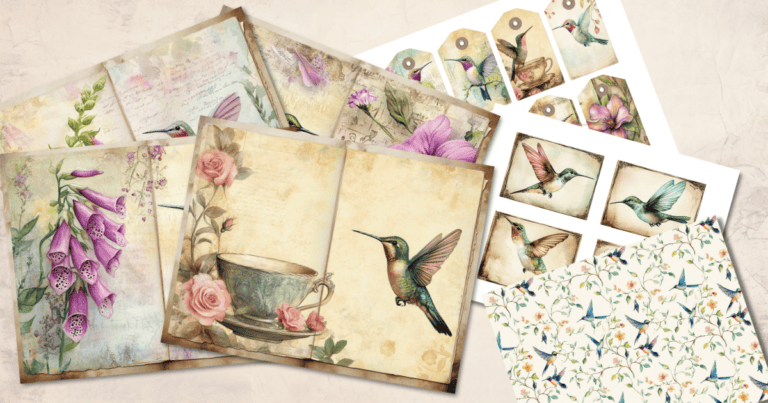
Click the image to explore the full kit in my Etsy shop.
How to build a story with visuals, texture, and small repeats
If you want your junk journal to feel like it “means something” even without words, start with mood. Think of mood like weather in a movie. You notice it fast, and it changes how everything else feels.
Once you choose that direction, you already know what kinds of visuals belong there.
Some symbols will be very personal to you, and others more general. Both work. Color and texture help set the tone. A sea-inspired story might use lighter colors and airy textures. A different theme might lean into richer tones or stronger contrast.
Then you add anchors, the little things that return so the reader doesn’t feel lost. Anchors can be as simple as the same kind of label on every spread, or the same style of handwriting, or a strip of washi in the same spot each time. You’re teaching the eye what to look for.
Repeat a small symbol to create a thread the reader can follow
A motif is a symbol you repeat across pages so it starts to feel like a character or a theme. It doesn’t have to be deep or fancy. It just has to show up again before the reader forgets it.
Try repeating your motif across 3 to 5 pages. That’s usually enough for the brain to catch it and start building meaning around it.
To keep it from feeling stiff, move it like it’s alive. Put a tiny key in the corner on one spread, then a big key half-covered on the next. Let a bird fly “forward” on one page and “back” on another. Trim a flower so you only see half, like it’s stepping out of the frame.
Make your pages feel like chapters with pockets, flips, and hidden notes
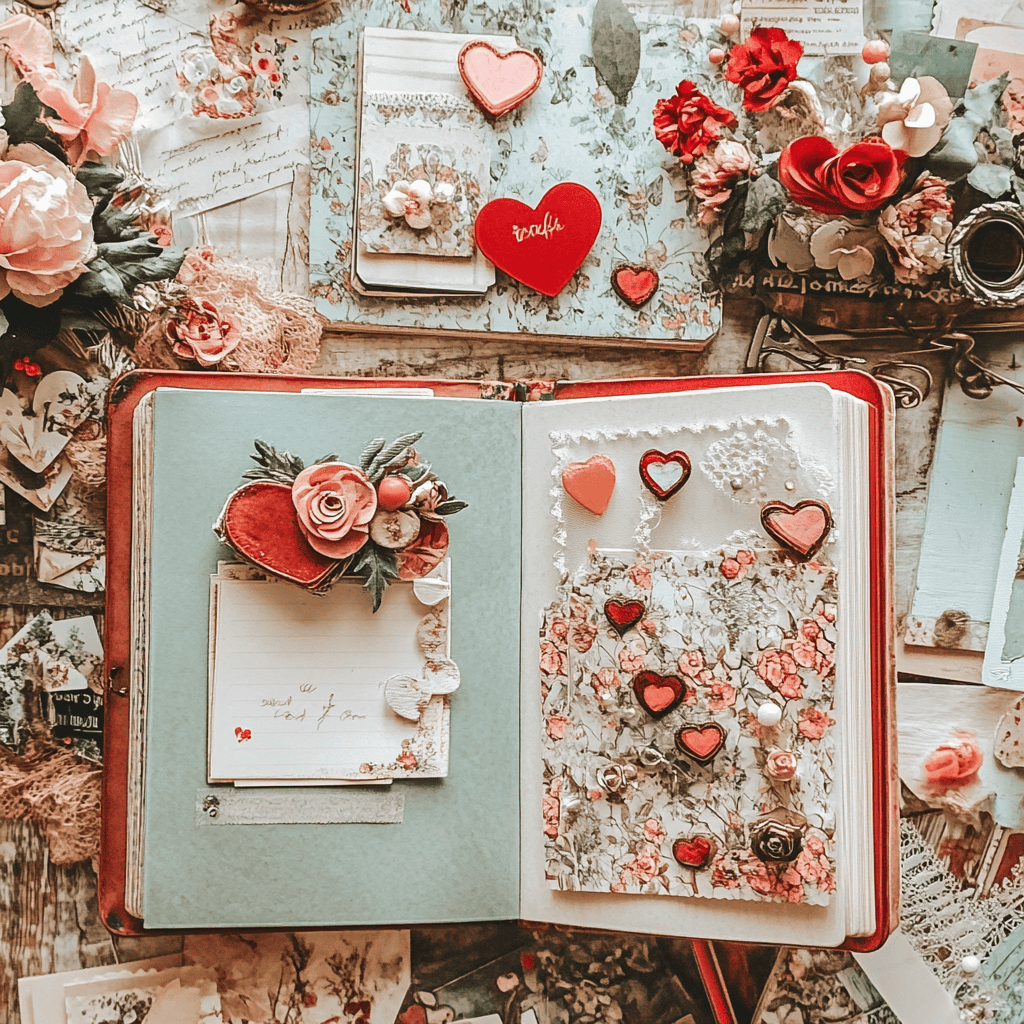
A story isn’t only what you show, it’s also when you show it. That’s where interactive parts shine. A pocket makes the reader pause. A flip-up makes them look twice.
Think of these parts as tiny chapter breaks. You don’t need complicated builds. Even one flap can turn a flat collage into a scene with a secret behind it.
You can also decide how personal or open you want things to be. If something feels more private, it can live inside a pocket or on a tag. If you want everything out in the open, that works too.
Pockets and tuck spots turn scraps into clues
A pocket changes a scrap from “decoration” into “evidence.” It tells your brain, this matters enough to keep.
What you hide can be tiny. In fact, tiny works better most of the time because it feels intimate, like a secret passed hand to hand.
Ideas that read like clues:
- A torn list with only three items left
- A “found” photo
- A small tag with one word (like “wait,” “home,” or “gone”)
- A pressed leaf, a scrap of thread, a dried flower petal
- A bit of map, a library card pocket, a ticket stub shape
- A note that’s half covered by tape so you can’t read it all
The action matters as much as the item. Pulling something out feels like learning more about the story. Sliding it back in feels like keeping it safe.
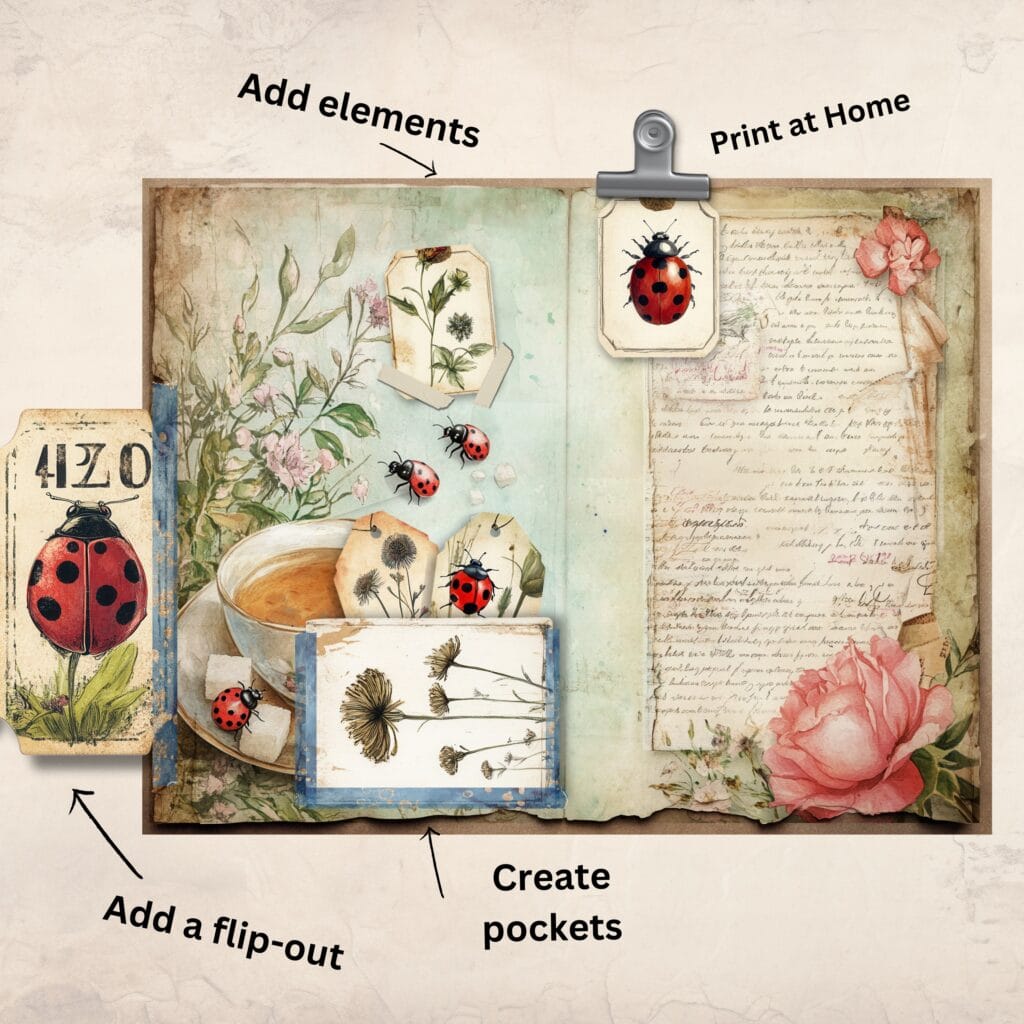
Click the image to explore the full kit in my Etsy shop.
Personal meaning, shared meaning, and “found object” stories
Junk journal storytelling doesn’t have to follow one path. You can build from memory, from feeling, or from an invented life. All three can sit on the same shelf, and all three can be honest.
Memory journaling is when your scraps come from your life, or from a life you knew well. A real receipt. A real envelope. A real handwritten note, even if you only show a corner.
Found object junk journals are when you make something that looks discovered, like it belonged to someone else. This is perfect when you want to tell a story but you don’t want it to be about you.
One Design, Many Meanings: The Ladybug Story
A symbol can carry your meaning without needing a caption. That’s one reason junk journals feel safe.
I use ladybugs because they remind me of summer ease. I choose warm reds, soft greens, tiny dotted wings. The whole spread feels like sunscreen, long grass, and time that isn’t scheduled.
Someone else used those same pages in a completely different way. For them, ladybugs were connected to a departed parent. Seeing them had become meaningful on a very personal level. The pages weren’t about summer at all — they were about connection.
The design didn’t change. The meaning did.
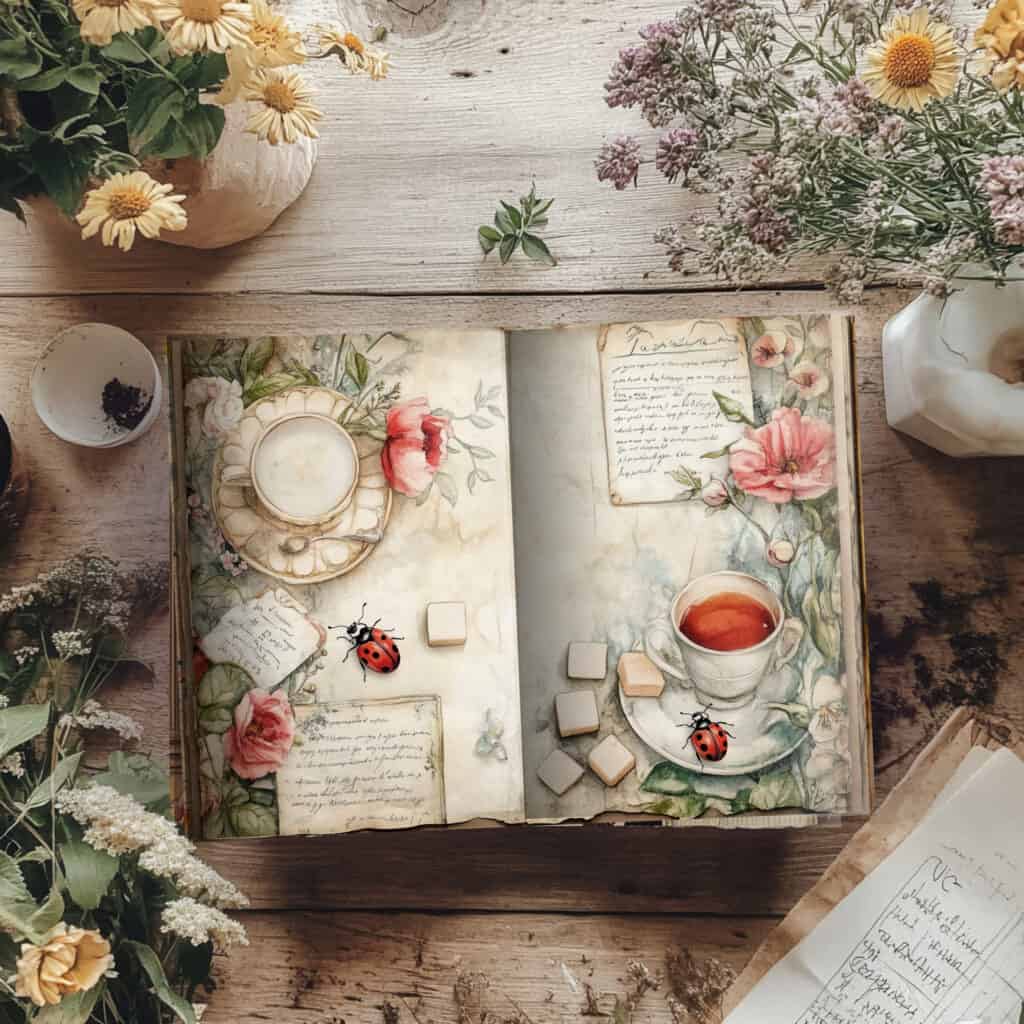
Click the image to explore the full kit in my Etsy shop.
Fictional Storytelling and Creative Play: The Paranormal Folio
Storytelling in junk journals doesn’t have to be personal at all. Sometimes it’s just about imagination and play.
When I created my paranormal folio, it was a completely fictional project. I had an idea for an adventure and built a story around it. The folio was designed to feel like it belonged to a paranormal researcher or enthusiast — almost like a found archive
I added notes, images, and details that suggested a bigger story. It wasn’t about memory or reflection. It was about creating a world, building curiosity, and enjoying the process of designing something that felt like a visual book or case file.
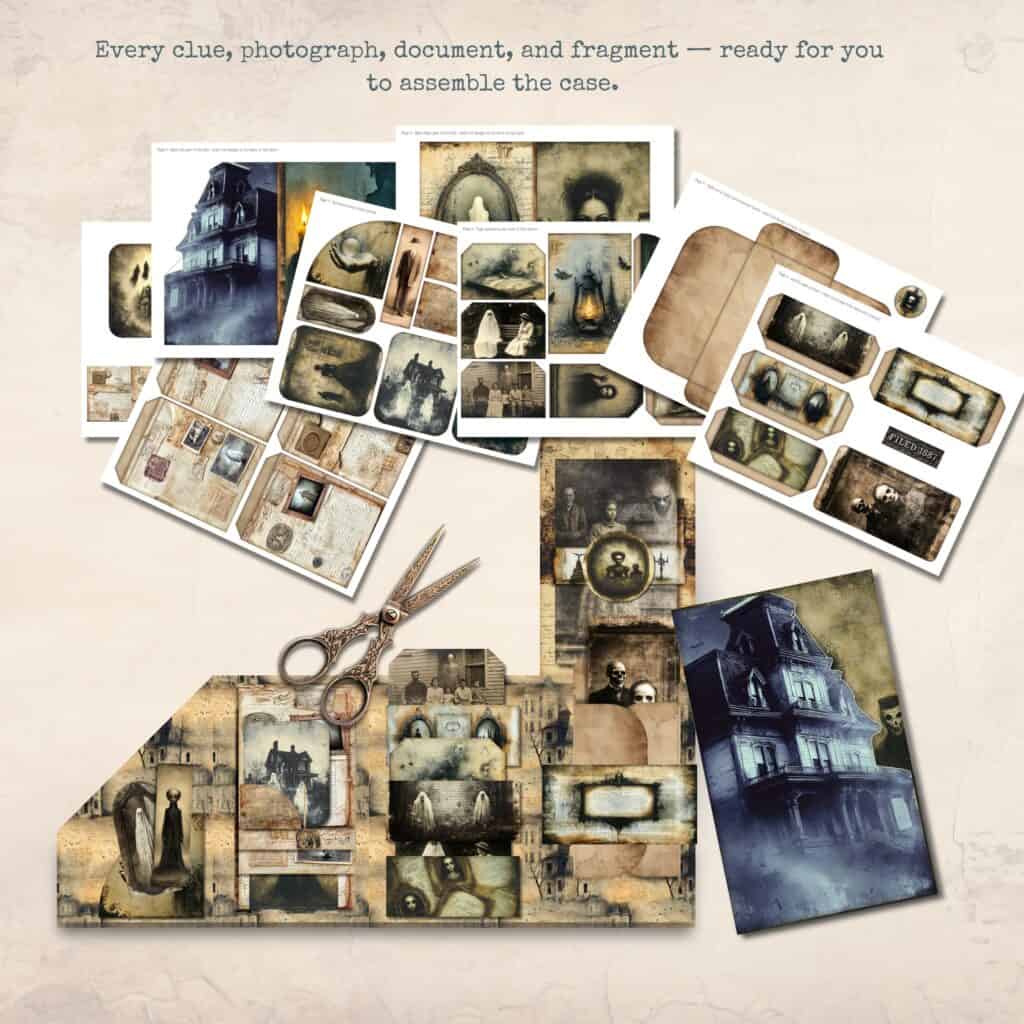
Click the image to explore the full kit in my Etsy shop.
You don’t need perfect art or lots of words to tell a story in a junk journal. You only need a few steady tools: sequence, mood, texture, repeating symbols, and hidden parts that control pace.
Junk journals give you a wide range of storytelling possibilities. They can hold personal meaning, shared symbols, or fully imagined stories. They can be detailed or simple, continuous or page-by-page. Or they can just be a creative expression in the moment.
Start Your Creative Journey
Free Starter Kit
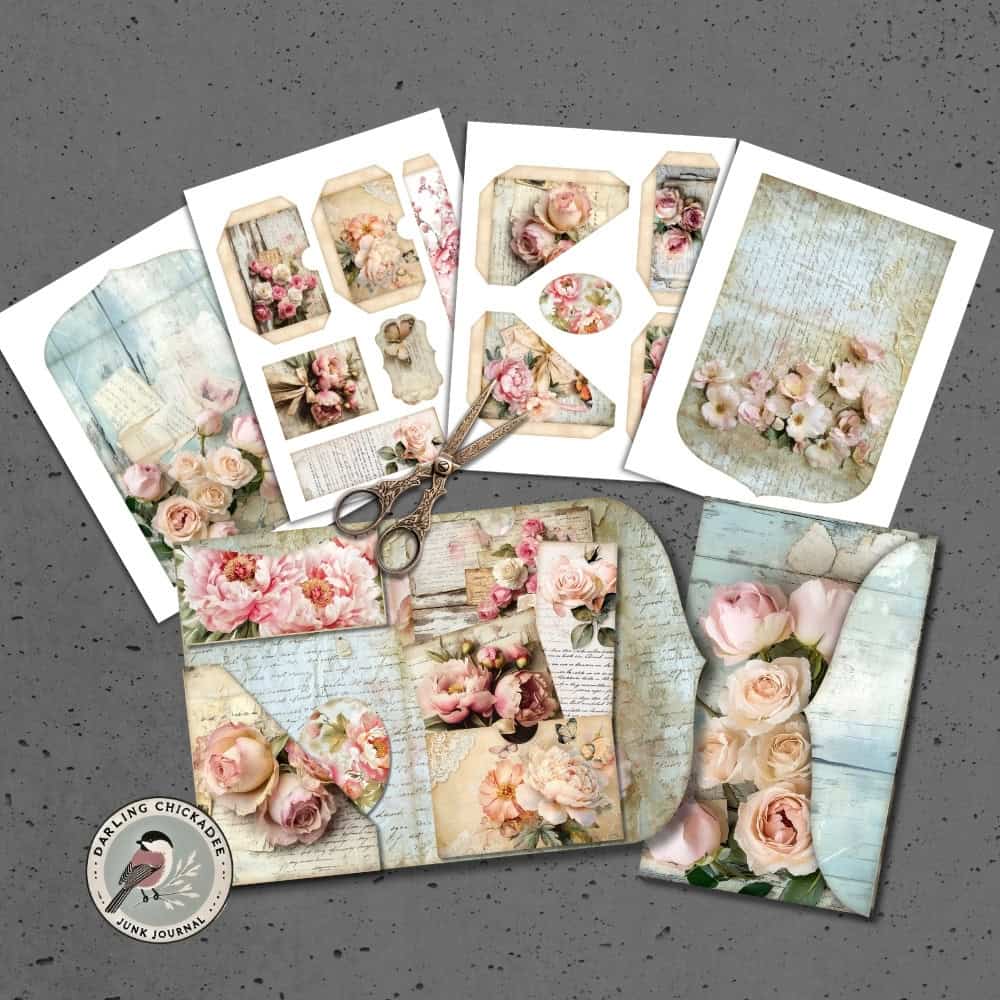
Discover the joy of junk journaling with a free beginner-friendly vintage folio. This printable set includes illustrated pages, pockets, tags, and easy step-by-step instructions — perfect for exploring layers, textures, and simple storytelling.
About Me
Welcome to Darling Chickadee, where creativity meets quiet magic. I’m a digital artist and paper alchemist who believes that journaling isn’t just about memory — it’s about imagination.
I create printable kits that help you tell stories, spark joy, and turn scraps of paper into something sacred.
Whether you’re building a vintage folio or layering textures in a handmade book, I’m here to inspire your next page.