What Is a Junk Journal? A Beginner-Friendly Guide to Its History, Evolution, and Creative Possibilities
Table of Contents
Have you ever saved a ticket, a receipt, or a folded note because it held a memory? Most of us do, even if we don’t call it anything. A junk journal is simply a way to gather those small paper pieces into one place, then build a book that feels like your life on paper.
A train ticket tucked into a book, a receipt from a first date, a postcard with a smeared stamp, a note folded into quarters and kept for years. These bits of life often ended up in drawers, tins, and old notebooks, pressed flat like dried flowers.
Now picture that same habit, but gathered into one place: a soft, lumpy book that crackles when you open it. Pages feel like a patchwork quilt. There’s a pocket with a tiny list, a torn map edge, a scrap of packaging you couldn’t throw away.
If you’ve been wondering what is a junk journal, you’re in the right place. You’ll learn what it is today, where it came from, how it changed over time, and what you can do with it now.
What Is a Junk Journal (and What Makes It Different From a Diary or Scrapbook)?
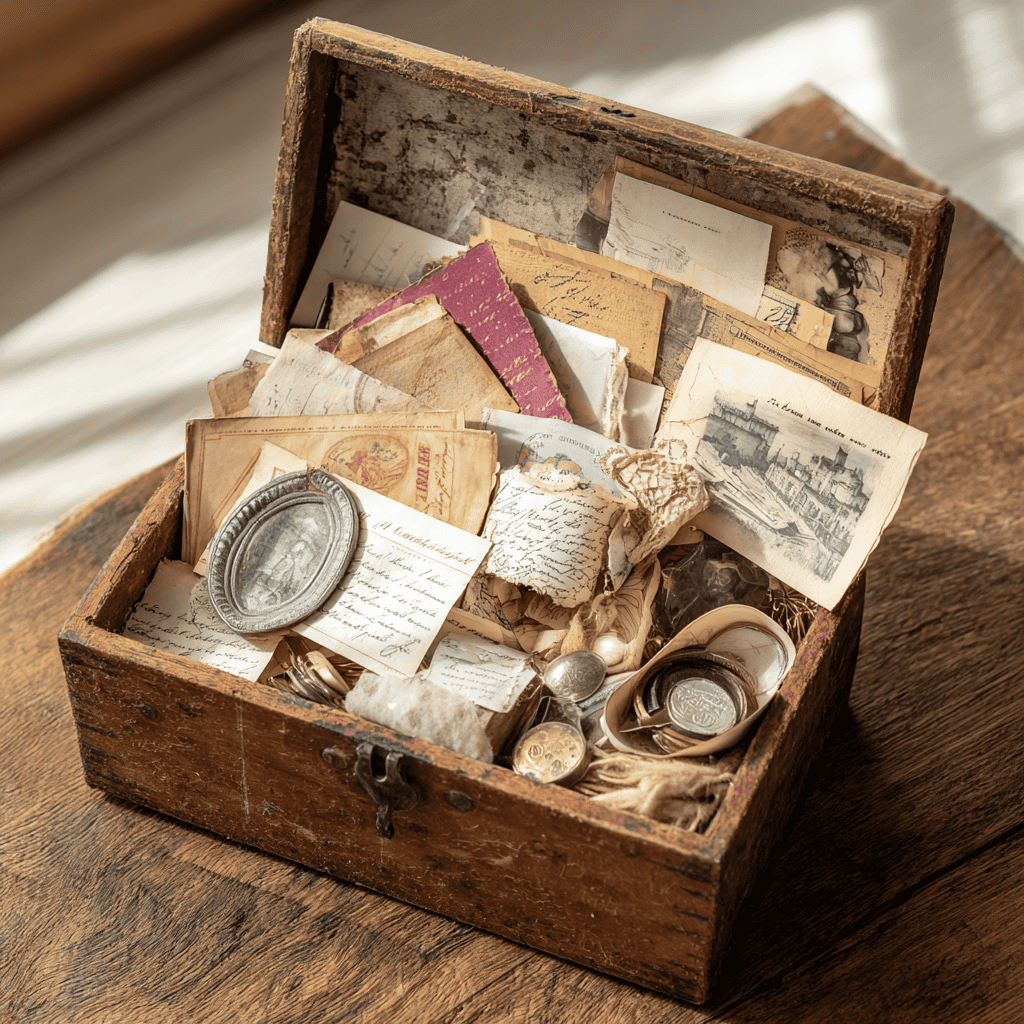
A junk journal is a personal book made from everyday paper and keepsakes, put together to hold memories, stories, and ideas.
That “everyday paper” can be almost anything: receipts, letters, packaging, maps, book pages, brochures, invitations, sheet music, or a menu from a place you loved. Some people write a lot. Others don’t write at all.
Most junk journals are handmade, with layered pages and bits tucked into pockets. Still, you can also start with a plain notebook and treat it like a home for saved scraps. The point isn’t the base you choose. It’s what you do with it.
The core idea: saved paper + personal meaning
In a junk journal, “junk” just means the kind of paper most people toss without thinking. The magic comes from the story you attach to it.
A coffee sleeve isn’t special by itself, but it can hold a whole morning: the weather, the talk you had, the song that played while you waited. When you glue it next to a torn note or a dated ticket stub, the page starts to feel like a scene, not a scrapbook assignment.
Junk journals often include little surprises. Think texture, layers, and hidden spots: a flap that lifts, a pocket that holds a tag, a page that’s stitched or wrinkled on purpose.
Junk journal vs. art journal, bullet journal, and scrapbook
These styles can overlap, and you’re allowed to mix them. Still, it helps to know the usual feel of each one:
- Junk journal: Memory-keeping and storytelling with reused paper, ephemera, and layers.
- Scrapbook: Often photo-centered, with captions and layout choices built around pictures.
- Bullet journal: Planning first, calendars and trackers, with notes and lists that support your week.
- Art journal: A place to make marks, test materials, and practice ideas, even when it’s messy.
If your pages don’t fit a neat label, that’s normal. A junk journal can hold planning, doodles, and photos.
Where Junk Journals Came From: Memory-Keeping Before It Had a Name
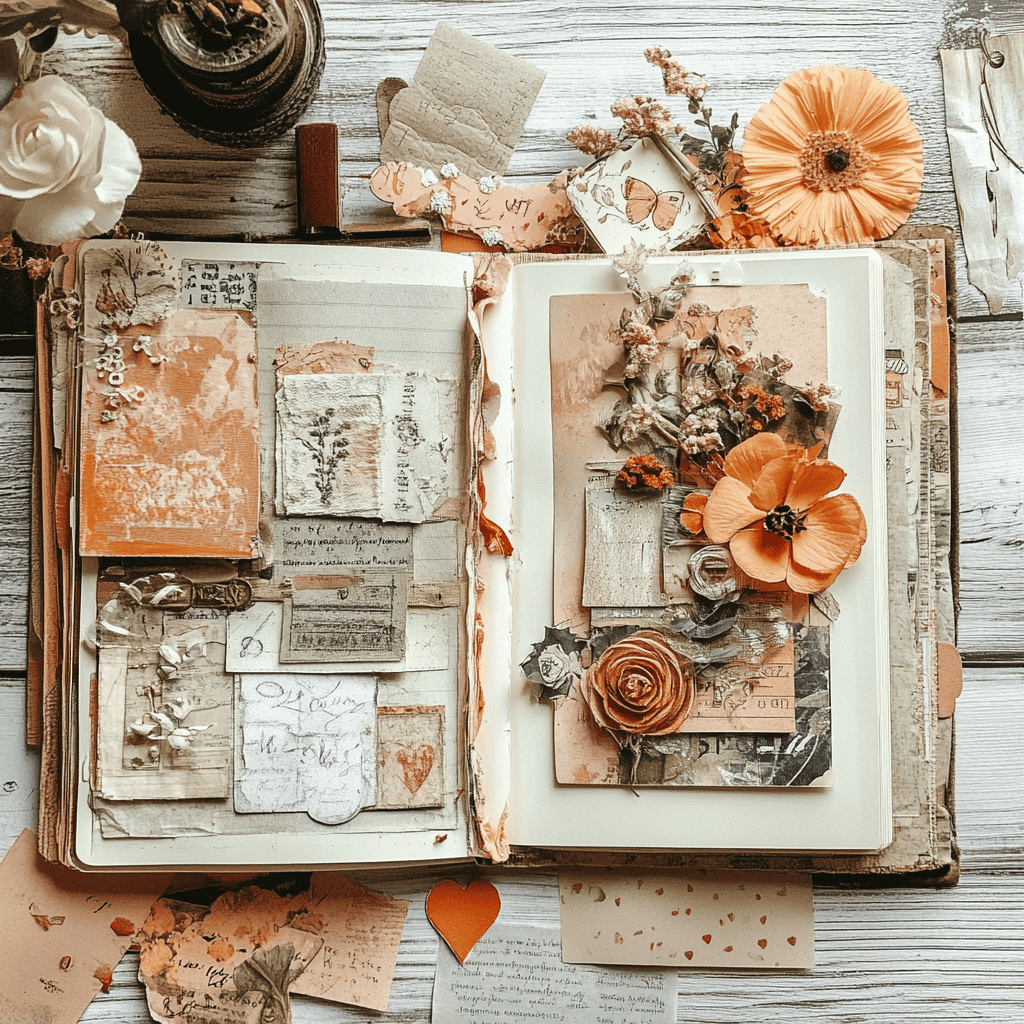
You’ve probably done a version of this already. You saved a card because someone wrote something kind. You held onto a museum ticket because the day felt big. You kept letters, photos, and small notes in a shoebox, not because you planned a project, but because you couldn’t part with them.
That’s the root of junk journaling: practical, sentimental saving. Early “junk journals” weren’t about matching colors or tidy pages. They were about not losing a piece of a moment.
It’s like opening an old box in January and finding summer inside. Paper has a way of carrying time. A crease, a smudge, a faded stamp, they all say, “I was there.”
From practical to decorative: when pages started to become “designed”
Over time, people began arranging their saved scraps with more intention. Not because they had to, but because it felt good to shape memory into a page you could revisit.
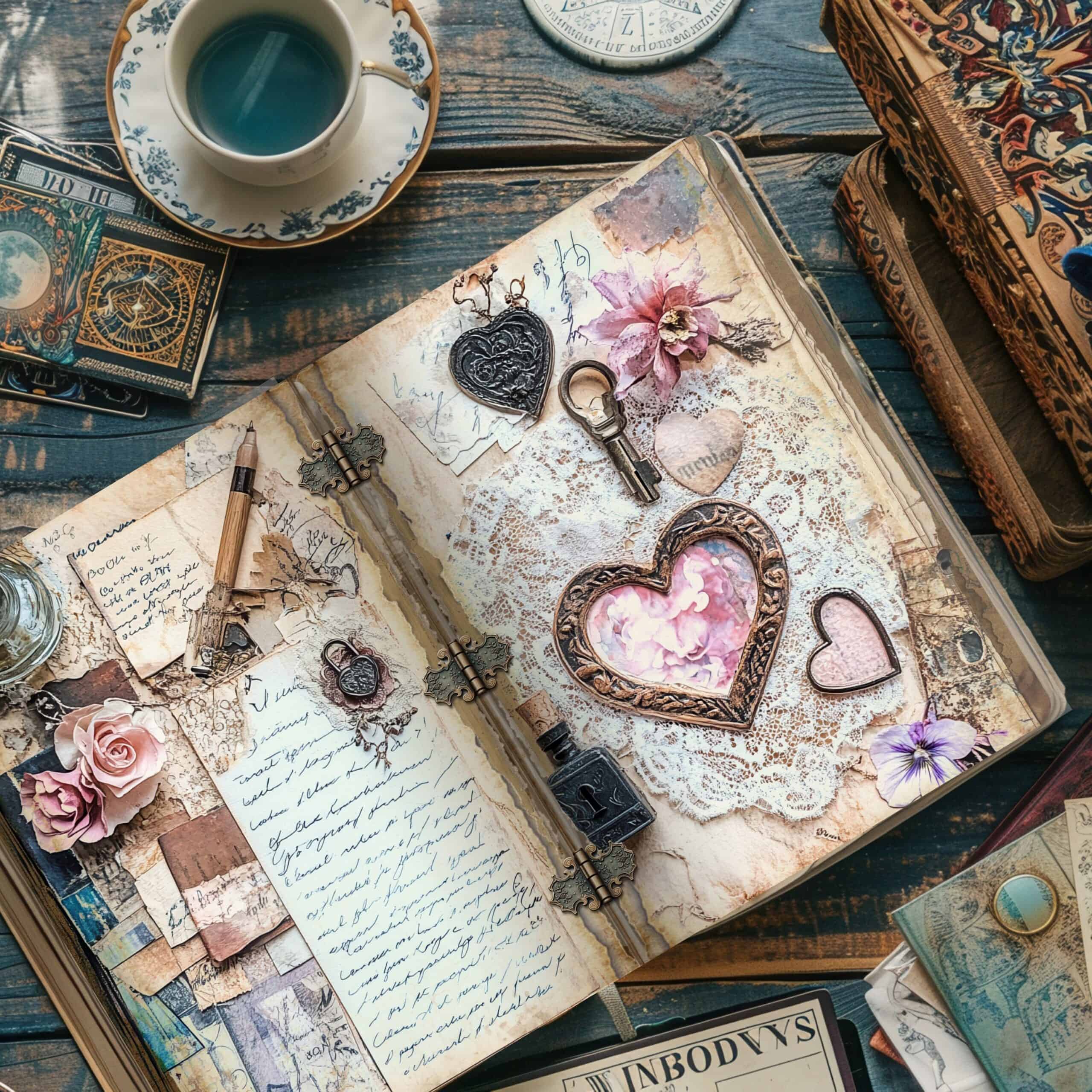
You might spot little extras like paper that’s been made to look old, a few simple stitches, some stamps, tags tied on with string, or pockets where you can tuck in small finds. They’re fun, and they can make a page feel finished, but you do not need any of them. Even one note taped to a plain page can tell a story as good as a page with lots of layers.
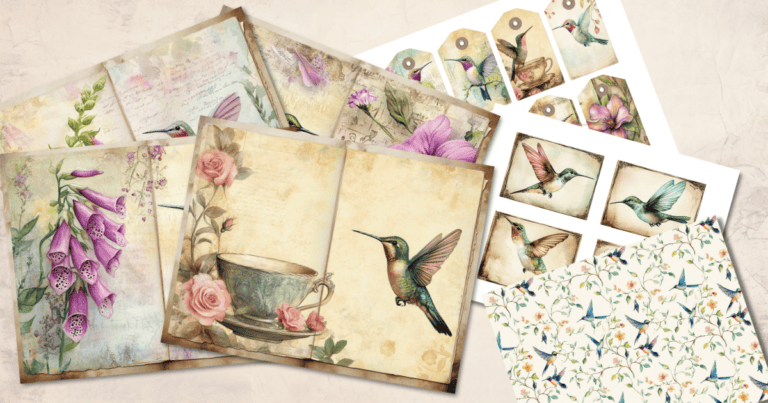
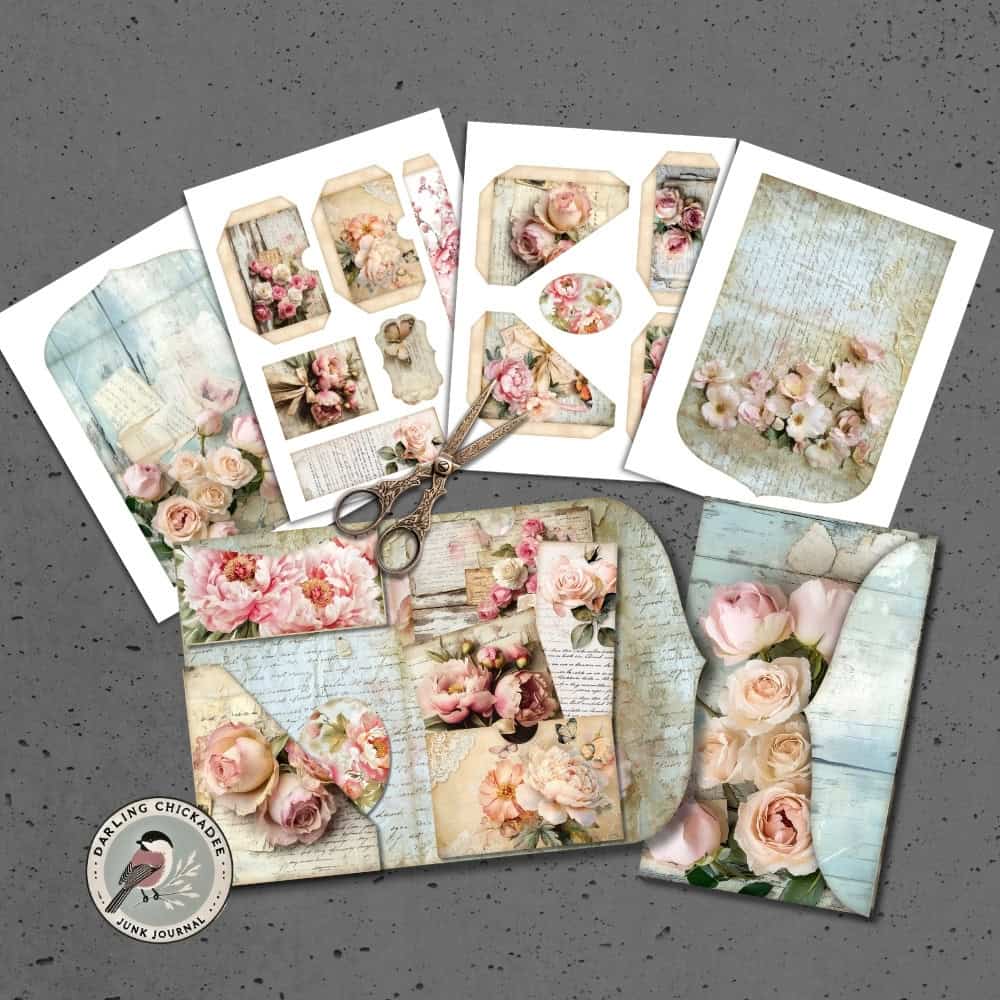
Click the image to explore the full kit in my Etsy shop.
How Junk Journaling Grew Into a Creative, Flexible Art Form
As more people shared their pages, junk journaling grew from a quiet habit into a creative practice. You may trade paper with friends, join swaps, or pick up ideas from what others show online. The heart of it stays the same: ordinary paper becomes a personal archive.
What changed is permission. You no longer need a trunk of old letters to begin. You can build a journal from what you have this week, or make one around a theme you love. Your journal doesn’t need to look vintage, tea-stained, or antique. It can be bright, modern, minimal, or playful.
Printables changed everything (and made starting easier)
Printables are designs you can download and print, either at home or at a print shop. They might be journal pages, tags, pockets, labels, or themed images that work together.
This opened the door for a lot of beginners. If you don’t have a stash of old paper, printables can give you a starting set that already matches in style and color. You can make a “retro kitchen” page set, a travel theme, a bookish journal, or a soft floral collection without waiting to find the perfect scraps.
Printables also work well with found ephemera. A printed tag can sit next to a real receipt. A printable pocket can hold a handwritten note. You’re not choosing one or the other. You’re building a page that feels like you.
More than a bound book: folios, mini books, tags, and page sets
A junk journal doesn’t have to be a thick, bound book with a spine. These days, the same idea often shows up in smaller projects too, which makes it easier to try and easier to finish:
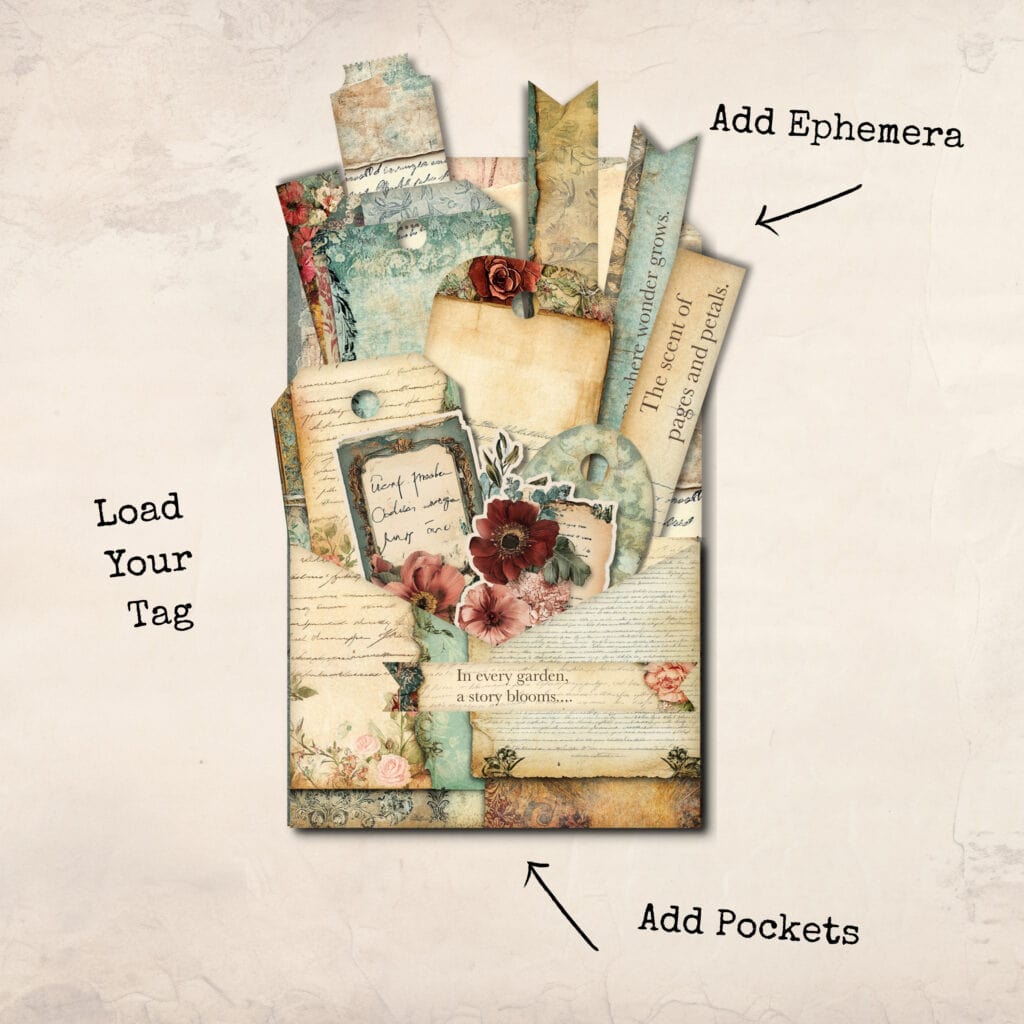
Folios feel like paper folders with pockets and flips. Loaded tags are single tags stuffed with layers and tiny add-ons. Page sets let you build a few spreads without committing to a whole journal.
If you’re new, these formats can feel like trying a recipe before hosting a dinner party. You get to play, learn what you like, and stop whenever you want.
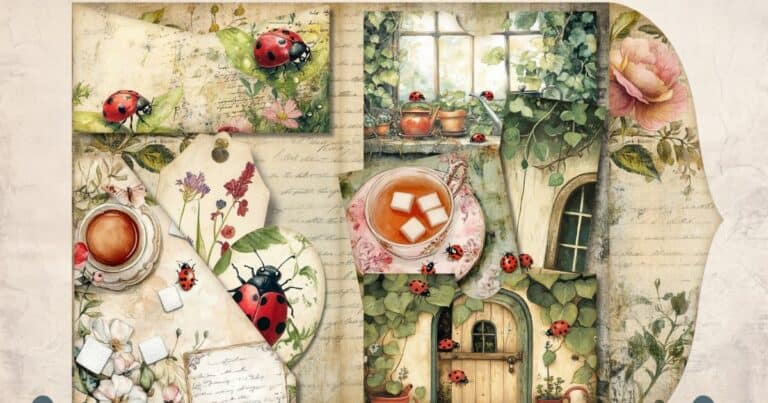
Click the image to explore the full kit in my Etsy shop.
Creative Possibilities: What You Can Use a Junk Journal For (No Writing Required)
A junk journal can be many things, and you get to choose the purpose. You can make it a memory book, a mood book, a place for comfort, or a place for wild ideas. You can keep it private or share it.
A few beginner-friendly directions that don’t require writing paragraphs:
A season holder: A few pages for winter receipts, gift wrap scraps, and cozy bits.
A trip keeper: Maps, tickets, brochures, and one small photo.
A “today” journal: Packaging from things you used, a note from a friend, a label you like.
A color story: Only blues, only warm neutrals, only bright candy colors.
A quiet feelings book: Soft paper, gentle images, and calming textures.
Pick one small purpose and let it guide your choices. That’s often enough to begin.
Storytelling with layers: personal memories or made-up tales
A junk journal can tell a story without full sentences.
You might document a real day at the beach using a torn map, a snack wrapper, and a faded ticket. You might build a “lost letters” tale with old-looking paper, a stamped date, and a pocket that hides a note. You might make a winter kitchen story with recipe scraps, a tea tag, and a little fold-out shopping list.
Words stay optional. A title, a date, a single line, or nothing at all can be enough. The layers carry the feeling, like a collage that remembers for you.
Click the image to explore the full kit in my Etsy shop.
A junk journal is a personal book made from everyday paper, built for memory, creativity, and story. It started as a simple habit of saving scraps, then grew into pages people arranged with care, with printables and flexible formats making it easier to start in your own way.
If you remember one thing, let it be this: a junk journal is a creative playground, not a performance. Start small, use what you already have, and let your pages hold whatever you feel like making.
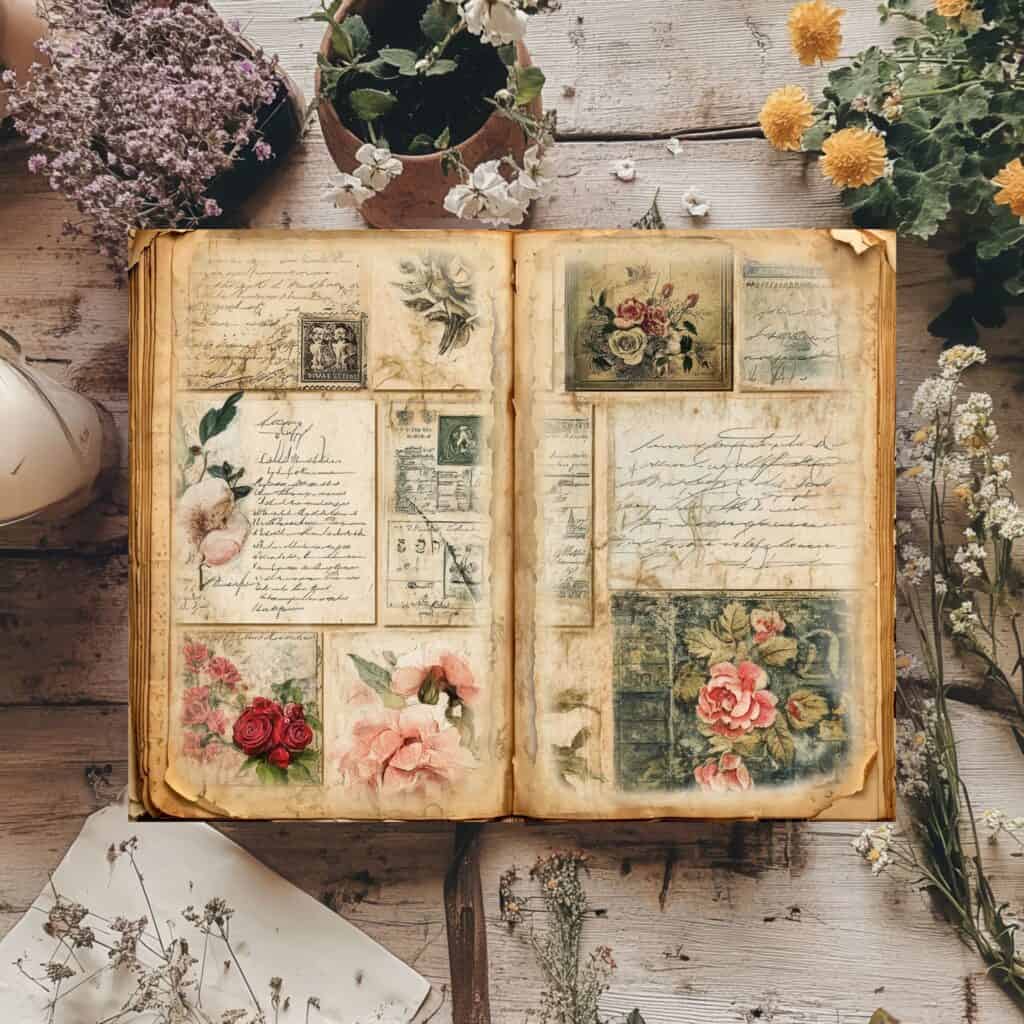
A junk journal is made up of many different elements—pages, pockets, tags, and interactive details—that you can mix and match in your own way.
Start Your Creative Journey
Free Starter Kit
Discover the joy of junk journaling with a free beginner-friendly vintage folio. This printable set includes illustrated pages, pockets, tags, and easy step-by-step instructions — perfect for exploring layers, textures, and simple storytelling.
About Me
Welcome to Darling Chickadee, where creativity meets quiet magic. I’m a digital artist and paper alchemist who believes that journaling isn’t just about memory — it’s about imagination.
I create printable kits that help you tell stories, spark joy, and turn scraps of paper into something sacred.
Whether you’re building a vintage folio or layering textures in a handmade book, I’m here to inspire your next page.